Early Orthodontic Treatment in Chamblee, GA

At Simon Says Smile, we believe a healthy smile starts long before the teen years. Early treatment lets us address developing issues while the jaw is still growing — a window that won’t stay open forever.
Early Orthodontic Treatment

Why Early Evaluation Matters

The American Association of Orthodontists (AAO) recommends a first orthodontic evaluation by age 7. At this stage, the mix of baby and permanent teeth reveals how the bite and jaw are developing. Many children don’t need immediate treatment, but the evaluation gives us a baseline to monitor growth and intervene at the right time.

An early evaluation allows us to identify:
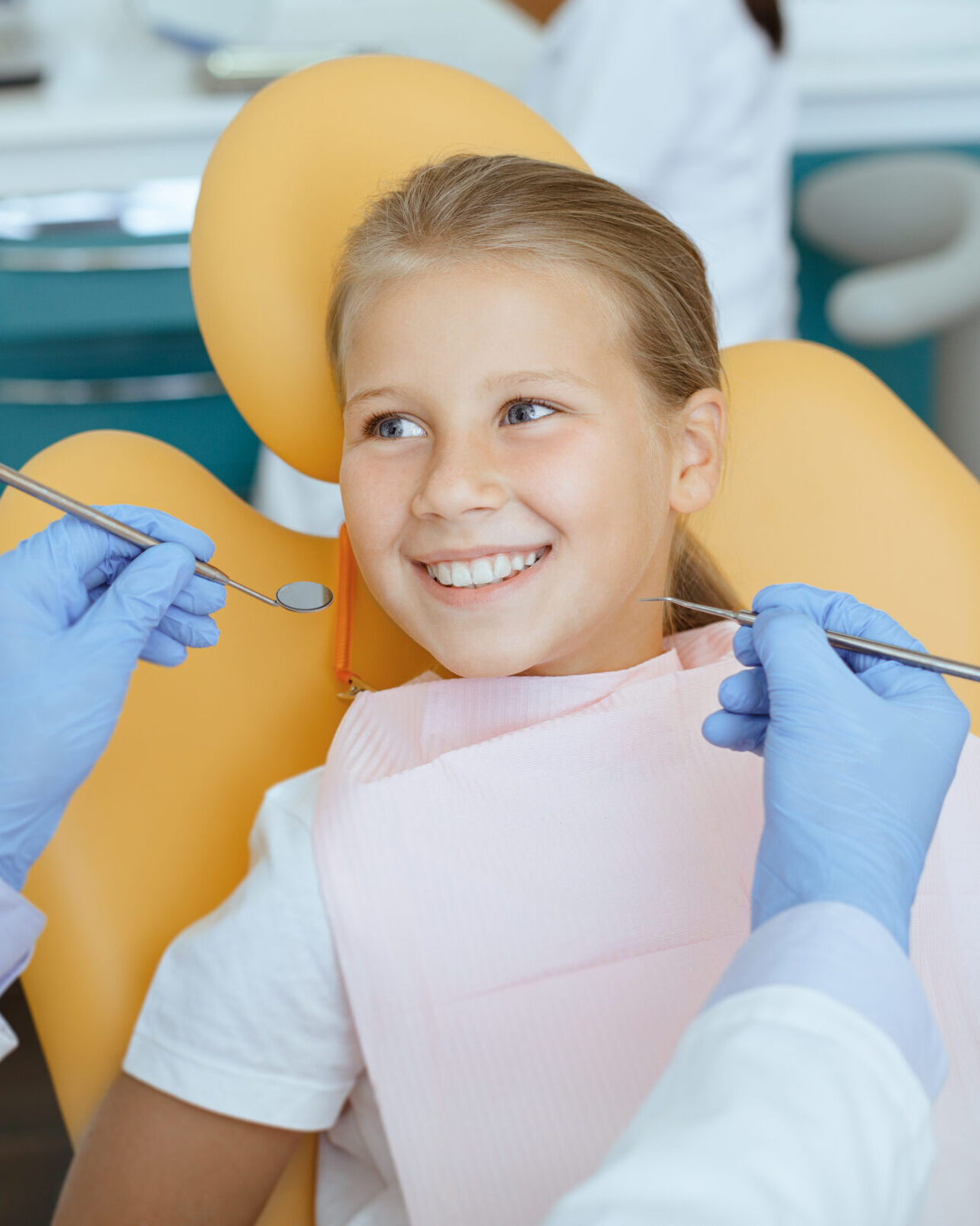
Fearless visit to doctor and dental treatment for child. Smiling girl in medical chair looks at dentist man in white coat, protective mask and rubber gloves with tools in his hands, and not afraid

Phase 1 Treatment and What It Can Accomplish

Phase 1 orthodontics (ages 7–10) guides jaw growth before all permanent teeth arrive — creating better conditions for Phase 2 and potentially reducing how much treatment is needed later.

Correcting Jaw and Bite Problems While the Jaw Is Still Growing

The jaw is most responsive during childhood, making developmental bite problems far easier to correct before growth is complete. Phase 1 treatment uses this window to guide the jaw into a healthier position — corrections that could require surgery if left until adulthood.

Creating Space for Permanent Teeth to Erupt Correctly

Crowding is one of the most common reasons for Phase 1 treatment. Rather than waiting until teeth erupt out of position, early intervention creates space proactively — often reducing or eliminating the need for extractions later.

Fixing Problems Before They Affect More Than the Teeth

Some childhood orthodontic issues go beyond the smile. An untreated crossbite can shift the jaw with every bite, causing uneven facial development. An open bite can affect speech and chewing. Phase 1 addresses these early, when growth-related corrections are most effective.

Pediatric Orthodontics

When Early Treatment Transitions to Phase 2

Phase 1 addresses the jaw and bite foundation, but most children still go on to Phase 2 once permanent teeth are fully in. Phase 2 uses braces or aligners to bring teeth into their final positions. When Phase 1 is done well, Phase 2 is often simpler, shorter, and more predictable.

Phase 2 treatment options at Simon Says Smile include:

Little boy and his big sister.

Oral Development Services That Support Early Treatment

Supporting Healthy Oral Function

Orthodontic treatment does more than straighten teeth. How a child breathes, swallows, and positions their tongue all shape how the mouth grows — mouth breathing can narrow the upper arch, and improper tongue posture removes the pressure that helps it widen. Addressing these patterns in Phase 1 means working with development, not against it.

Habit-Breaking Appliances and Soft Tissue Procedures

Oral habits like thumb sucking and tongue thrusting reshape the arch and redirect how permanent teeth erupt. Tongue-tie and lip-tie compound these effects. Addressing both early gives Phase 1 a cleaner foundation and makes corrections more likely to hold long term.

Frequently Asked Questions

Everything You Need to Know About Early Orthodontic Treatment

What age should my child have their first orthodontic evaluation?

The American Association of Orthodontists recommends that children have their first orthodontic evaluation by age 7. At this point, a mix of baby and permanent teeth gives us a clear picture of how the bite is forming and whether the jaw is developing on track. Most children this age do not need immediate treatment, but an early evaluation establishes the baseline we need to monitor growth and step in at exactly the right time if intervention becomes necessary.

Early treatment is most effective for issues rooted in jaw development rather than tooth position alone. Crossbites, underbites, and narrow arches are among the most common concerns we address during Phase 1, along with crowding caused by a jaw that does not have enough room for the permanent teeth coming in. We can also correct the effects of oral habits like thumb sucking, guide teeth that are erupting in the wrong direction, and address structural contributors like tongue-tie and lip-tie that would otherwise work against healthy development. Issues that are purely about final tooth alignment are typically completed during Phase 2 once all permanent teeth have fully erupted.

The appliances used in Phase 1 depend entirely on what needs to be corrected. Palatal expanders are among the most common, gradually widening the upper arch to create room for incoming permanent teeth and correct crossbites. Partial braces may be placed on specific teeth to guide their position during eruption. Space maintainers are used when a baby tooth has been lost too early to prevent neighboring teeth from drifting into the gap. For children with oral habits, custom habit-breaking appliances discourage thumb sucking or tongue thrusting consistently without requiring the child to remember on their own. We explain every recommended appliance in detail before treatment begins so both the child and parent know exactly what to expect.

At Simon Says Smile, Where every smile is a win!

Get In Touch

Reach out to us today to book your appointment. Our team looks forward to welcoming you and guiding you every step of the way toward a smile you’ll feel confident sharing.

Hours:

Mon-Thu: 7:30AM – 5:00PM
Fri: 8:00AM – 1:00PM
Sat-Sun: Closed

"*" indicates required fields